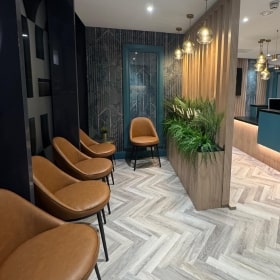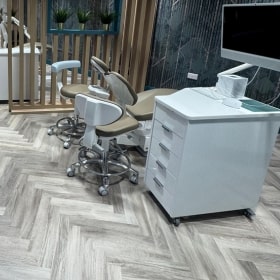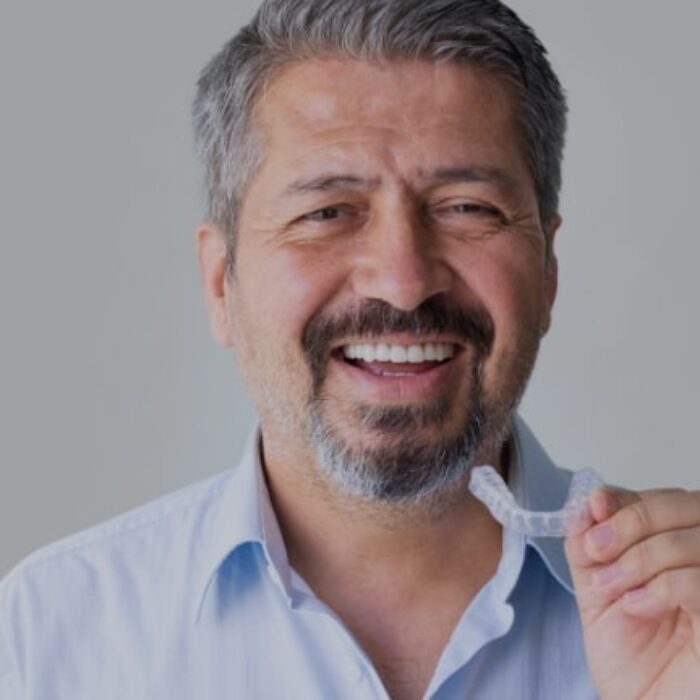
Expert orthodontic care at Lusk Orthodontics, North Dublin, led by Dr Erfan Salloum
If you’re thinking about getting braces or clear aligners, you may wonder whether to visit your regular dentist or a specialist orthodontist.
Many general dentists offer orthodontic treatment, while others refer patients to a specialist. Both play important roles in dental care, but their training and areas of expertise differ.
At Lusk Orthodontics in North Dublin, we believe that understanding these differences helps patients make informed decisions about their treatment.
Our clinic was founded by Dr Erfan Salloum, Specialist Orthodontist, who has extensive experience treating children, teenagers and adults, including patients with complex bite and jaw problems.
In this article, we explain the difference between a general dentist and a specialist orthodontist, when specialist care may help, and what to consider when choosing an orthodontist in Dublin.
A general dentist provides a wide range of dental treatments to maintain healthy teeth and gums.
These include routine dental examinations, fillings, extractions, gum care and preventive advice.
Some general dentists also provide orthodontic treatment, including fixed braces and clear aligners.
In Ireland, dentists do not need specialist orthodontic registration to offer orthodontic treatment. However, they must have appropriate training and experience and work within their professional competence.
General dentists play an essential role in oral healthcare. Many also work closely with specialist orthodontists when patients need more advanced treatment.
A specialist orthodontist is a dentist who has completed additional, recognised postgraduate training in orthodontics.
This usually involves at least three years of full-time specialist training after qualifying as a dentist.
Specialist orthodontic training focuses on diagnosing and treating problems involving tooth alignment, bite relationships and jaw development.
Orthodontists develop advanced skills in treating:
In Ireland, the Dental Council maintains a specialist register that allows patients to check whether their orthodontist holds recognised specialist qualifications.
| General Dentist | Specialist Orthodontist | |
|---|---|---|
| Main focus | General dental and oral health | Tooth alignment, bite correction and jaw development |
| Training | Dental degree and any additional orthodontic courses | Dental degree plus recognised specialist orthodontic training |
| Orthodontic cases | Cases within the dentist’s training and experience | Simple to highly complex orthodontic problems |
| Specialist registration | Not required to provide orthodontic treatment | Registration on the Dental Council’s orthodontic specialist list |
| Clinical approach | General dental care, including selected orthodontic treatments | Dedicated focus on orthodontic diagnosis and treatment |
The difference is not simply the type of braces or aligners a clinician offers.
Specialist orthodontists receive extensive training in diagnosing bite and jaw problems and planning the tooth movements needed to correct them.
Orthodontic treatment involves much more than straightening crooked teeth.
Two patients may have similar-looking smiles but very different underlying problems.
For example, one patient may have protruding upper front teeth because the teeth lean too far forward. Another may have the same appearance because the lower jaw sits too far back.
Although both patients have a large overjet, they may need different treatments.
At Lusk Orthodontics, we assess the teeth, bite, jaw relationship, facial proportions and supporting bone before recommending treatment.
This approach helps us identify the cause of the problem and choose treatment that addresses the patient’s individual needs.
Patients can visit a specialist orthodontist for both simple and complex orthodontic problems.
However, specialist assessment may be particularly valuable in certain situations.
Patients with large overjets, deep overbites, underbites, open bites or significant Class II and Class III malocclusions may need more detailed planning.
Some problems involve the position of the teeth, while others involve the relationship between the jaws.
Children’s teeth and jaws continue to develop throughout childhood and adolescence.
An early orthodontic assessment can help identify problems that may benefit from treatment during growth.
At Lusk Orthodontics, we generally recommend an initial orthodontic assessment around seven to eight years of age, or earlier when specific concerns arise.
Not every child needs early treatment. In many cases, monitoring growth and waiting for the right stage produces a better treatment plan.
A narrow upper jaw may cause crossbites, crowding or problems with the relationship between the upper and lower dental arches.
Younger children may benefit from conventional palatal expansion.
Older teenagers and adults may require more advanced approaches, such as mini-screw-assisted rapid palatal expansion (MARPE) or surgically assisted expansion.
Adults may have missing teeth, previous dental work, gum problems or significant bite discrepancies that make orthodontic treatment more challenging.
These cases often require careful planning and close communication with the patient’s general dentist or other specialists.
Some patients have significant differences in jaw position that orthodontic treatment alone cannot fully correct.
These patients may benefit from a combined approach involving specialist orthodontics and corrective jaw surgery.
General dentists and specialist orthodontists often work together to provide comprehensive dental care.
Dentists may refer patients when they identify complex orthodontic problems or when treatment requires advanced planning.
Common reasons include severe crowding, impacted teeth, jaw growth concerns, skeletal expansion, complex bite correction and orthodontic preparation for jaw surgery.
Lusk Orthodontics welcomes referrals from dentists and dental specialists throughout Dublin and across Ireland.
Our Clinical Director, Dr Erfan Salloum, regularly manages complex orthodontic cases that require advanced biomechanics, skeletal expansion or multidisciplinary treatment.
Lusk Orthodontics is a dedicated specialist orthodontic clinic providing treatment for children, teenagers and adults.
Our clinic combines modern digital technology with specialist clinical expertise to deliver individualised orthodontic care.
We provide treatment for routine alignment problems as well as complex cases involving significant bite discrepancies, narrow jaws and orthodontic preparation for jaw surgery.
Dr Erfan Salloum is the Founder and Clinical Director of Lusk Orthodontics and an internationally recognised Specialist Orthodontist.
Throughout his career, he has treated thousands of patients, ranging from straightforward alignment cases to complex orthodontic and jaw-related problems.
His approach focuses on accurate diagnosis, detailed treatment planning and careful attention to every stage of treatment.
Dr Salloum holds a Doctorate in Clinical Dentistry in Orthodontics from University College Cork and a Master’s qualification in Lingual Orthodontics from the University of Padua, Italy.
He also holds postgraduate memberships and fellowships from the Royal Colleges of Surgeons in Ireland, England, Edinburgh and Glasgow.
Dr Salloum is one of a small number of orthodontists in Ireland to have achieved Diplomate status from the European Board of Orthodontists (EBO).
He is also the only orthodontist in Ireland to hold Diplomate status from both the EBO and the European Board of Aligner Orthodontists (EBAO).
These qualifications involve independent assessment of orthodontic knowledge, clinical planning and treatment outcomes.
In 2026, Dr Salloum received the Maurice Berman Prize for Clinical Excellence from the British Orthodontic Society (BOS).
This award recognises excellence in clinical orthodontics and reflects his commitment to high standards of treatment planning and patient care.
Dr Salloum holds Titular Membership of the European Society of Lingual Orthodontics (ESLO) and Active Membership of the World Society of Lingual Orthodontics (WSLO).
He is the only orthodontist in Ireland to hold both distinctions.
He also has extensive experience with the customised WIN lingual braces system, which allows orthodontists to treat complex cases using braces fitted behind the teeth.
This expertise allows Lusk Orthodontics to offer patients advanced invisible orthodontic treatment alongside conventional fixed braces and clear aligners.
Our clinic offers a comprehensive range of orthodontic treatments, including:
We select treatment according to the patient’s diagnosis, dental health, facial proportions and individual needs.
Our priority is to recommend the most suitable approach rather than favouring one appliance or treatment system.
Clear aligners are a treatment tool. Their success depends on accurate diagnosis, careful planning and good patient cooperation.
Both general dentists and specialist orthodontists can provide clear aligner treatment within their professional competence.
However, complex cases may require advanced control of tooth movement, bite correction and anchorage.
At Lusk Orthodontics, Dr Salloum’s specialist training and European Board certification in aligner orthodontics support the planning and management of these cases.
We also assess whether clear aligners are the best choice or whether fixed braces, lingual braces or another treatment approach may provide better control.
The Dental Council of Ireland maintains a public register of dentists and recognised dental specialists.
Patients can use this register to check whether their clinician holds specialist orthodontic registration.
You can find more information through the Dental Council of Ireland.
Before starting orthodontic treatment, we encourage patients to ask about their clinician’s training, experience and treatment options.
General dentists and specialist orthodontists have different but complementary roles.
Your general dentist looks after your overall dental health, including routine examinations, fillings, gum care and preventive treatment.
Your specialist orthodontist focuses on tooth alignment, bite correction and jaw development.
At Lusk Orthodontics, we encourage patients to continue attending their regular dentist throughout orthodontic treatment.
We also work closely with referring dentists, restorative specialists and oral and maxillofacial surgeons when patients need multidisciplinary care.
This helps ensure that orthodontic treatment supports long-term dental health.
If you are considering braces, clear aligners or treatment for a complex bite problem, a specialist orthodontic consultation can help you understand your options.
At Lusk Orthodontics in North Dublin, our team provides orthodontic care under the clinical leadership of Dr Erfan Salloum.
We welcome patients from Lusk, Swords, Malahide, Rush, Skerries, Balbriggan and the wider Dublin area, as well as patients travelling from elsewhere in Ireland for specialist orthodontic treatment.
Whether you need straightforward teeth straightening or a more complex treatment plan, we focus on careful diagnosis, clear advice and treatment suited to your individual needs.
Book your specialist orthodontic consultation at Lusk Orthodontics.
BACK TO BLOGAt Lusk Orthodontics, we’re proud to offer one of the most comprehensive ranges of orthodontic treatments in Dublin and across Ireland — all delivered to the highest clinical standards.

5.0
We highly recommend Dr Erfan Sallom. He transformed our daughter’s teeth, and she’s extremely happy with her beautiful smile! We were looking for an Orthodontist…
5.0
I was very anxious about orthodontic treatment and, as such, delayed it for years. I did not need to be nervous with the expertise and…
5.0
I would really recommend anyone to Dr Erfan Salloum. My experience with Erfan was amazing. I had no issue; he was very knowledgeable about his…
5.0
I have just finished my two-year orthodontic treatment with Dr Erfan, and I would highly recommend him. He explained everything perfectly about the treatment plan,…
5.0
We highly recommend Dr Erfan Sallom. He transformed our daughter’s teeth, and she’s extremely happy with her beautiful smile! We were looking for an Orthodontist…
5.0
I was very anxious about orthodontic treatment and, as such, delayed it for years. I did not need to be nervous with the expertise and…
5.0
I would really recommend anyone to Dr Erfan Salloum. My experience with Erfan was amazing. I had no issue; he was very knowledgeable about his…
5.0
I have just finished my two-year orthodontic treatment with Dr Erfan, and I would highly recommend him. He explained everything perfectly about the treatment plan,…

“We highly recommend Dr Erfan Sallom. He transformed our daughter’s teeth, and she’s extremely happy with her beautiful smile! We were looking for an Orthodontist...”

“I was very anxious about orthodontic treatment and, as such, delayed it for years. I did not need to be nervous with the expertise and...”
“I would really recommend anyone to Dr Erfan Salloum. My experience with Erfan was amazing. I had no issue; he was very knowledgeable about his...”
“I have just finished my two-year orthodontic treatment with Dr Erfan, and I would highly recommend him. He explained everything perfectly about the treatment plan,...”


Practice
Treatments
Terms
Discover behind-the-scenes care and amazing results on our Instagram. From patient transformations to everyday moments at our clinic, our feed is filled with smiles, stories, and inspiration.
Copyright