For a long time, orthodontic treatment was thought of as something reserved for teenagers — a phase of the school years, marked by fixed braces and regular adjustments. That picture has been changing. Dental practices across Dublin are seeing a steady rise in adult patients asking about tooth alignment, many of them well into their thirties, forties and beyond.
So what sits behind the shift? The reasons are varied, and they say as much about how adults view their health and daily lives as they do about dentistry itself. This article looks at the factors drawing more adult patients towards treatment.
There was once an assumption that if you missed orthodontic treatment as a teenager, the window had closed. That idea has largely fallen away. Teeth can be moved at most ages, provided the gums and supporting bone are healthy, and adult patients now make up a meaningful share of those seeking alignment.
Some are returning to something they were unable to pursue earlier in life. Others are addressing changes that have appeared over time, as teeth can shift gradually across the years — even in patients who wore braces before.
While the look of a smile is often the starting point, many adult patients describe more practical motivations once they sit down to talk it through. Crowded or overlapping teeth can be harder to clean, which has knock-on effects for gum health over time. Uneven wear or difficulty keeping certain areas clean are concerns a dentist may raise during a routine check.
This link between alignment and everyday oral care is one of the less obvious drivers of adult treatment, and it is a subject worth exploring in its own right.
Adults spend much of their lives being seen and heard — in meetings, on video calls, at social occasions. It is understandable that some patients become more conscious of their teeth in these settings, and decide the time is right to address something that has been on their mind for years.
The motivation here is rarely dramatic. More often, patients describe it as finally getting round to something they had put off, rather than a sudden decision.
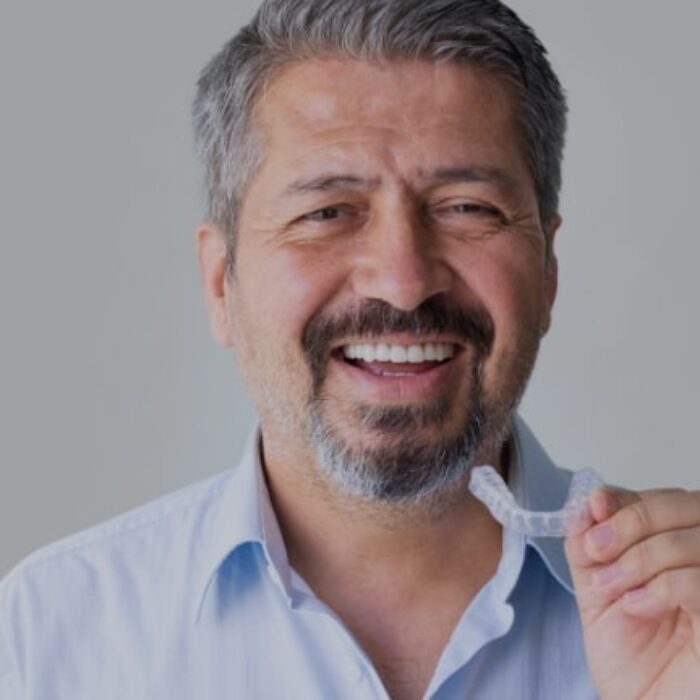
Part of the reason adult patients feel more able to proceed is that treatment now sits more comfortably alongside work and daily routines. Completely invisible (Lingual braces), and lower-visibility (removable clear aligners , fixed ceramic braces) approaches have made the prospect feel less disruptive for those who were once put off by the thought of prominent braces.
When it comes to discreet orthodontic treatment, our founder and specialist orthodontist, Dr Erfan Salloum, brings independently assessed expertise in both clear aligners and lingual braces.
Our founder and specialist orthodontist, Dr Erfan Salloum, is the only orthodontist in Ireland to hold this combination of credentials: European Board of Aligner Orthodontics certification, Titular Membership of the European Society of Lingual Orthodontics, and Active Membership of the World Society of Lingual Orthodontics.
These achievements reflect formal assessment of his clinical work by experienced peers in clear aligner and lingual orthodontics.
At Lusk Orthodontics, this expertise informs our approach to discreet treatment, with options tailored to each patient’s needs.
Another quiet factor is how the first stage has changed. Digital scanning and imaging have replaced some of the less comfortable steps patients may remember, and many find the assessment more straightforward than expected.
For patients who had put off even booking a consultation, a more comfortable starting point can make a real difference. What a modern assessment actually involves is something many adult patients are curious about before they commit.
There is also a cultural element. Adults today are generally more open about looking after their appearance and health, and dental treatment is increasingly seen as part of that, rather than something to feel self-conscious about. Seeing friends, colleagues or familiar faces undergo treatment has helped make the idea feel ordinary for adult patients.
None of these changes the fundamentals: treatment is a considered commitment, and outcomes vary between patients. But the hesitation that may once have discouraged adults from asking the question has largely faded.
Adult patients who begin looking into treatment usually have follow-up questions, and a few come up again and again:
Each of these deserves a fuller answer than a single article allows, and a good practice will happily talk them throug
Fixed braces remain an established option for children, teenagers and adults, including patients with complex orthodontic needs. Although they are not the right choice for everyone, their long clinical history, versatility and extensive research base mean they continue to be recommended alongside clear aligners and other alternatives.
At Lusk Orthodontics, our founder and specialist orthodontist, Dr Erfan Salloum, is one of a small number of orthodontists in Ireland to have achieved European Board of Orthodontics (EBO) certification. His cases submitted for assessment were treated with fixed braces in children and adults. This qualification reflects independent evaluation of his clinical work against demanding international standards.
If you’re considering fixed braces in Swords, Lusk or elsewhere in North Dublin, a personalised consultation with Dr Salloum can help you understand which treatment best suits your teeth, bite and goals.
BACK TO BLOG
At Lusk Orthodontics, we’re proud to offer one of the most comprehensive ranges of orthodontic treatments in Dublin and across Ireland — all delivered to the highest clinical standards.

5.0
We highly recommend Dr Erfan Sallom. He transformed our daughter’s teeth, and she’s extremely happy with her beautiful smile! We were looking for an Orthodontist…
5.0
I was very anxious about orthodontic treatment and, as such, delayed it for years. I did not need to be nervous with the expertise and…
5.0
I would really recommend anyone to Dr Erfan Salloum. My experience with Erfan was amazing. I had no issue; he was very knowledgeable about his…
5.0
I have just finished my two-year orthodontic treatment with Dr Erfan, and I would highly recommend him. He explained everything perfectly about the treatment plan,…
5.0
We highly recommend Dr Erfan Sallom. He transformed our daughter’s teeth, and she’s extremely happy with her beautiful smile! We were looking for an Orthodontist…
5.0
I was very anxious about orthodontic treatment and, as such, delayed it for years. I did not need to be nervous with the expertise and…
5.0
I would really recommend anyone to Dr Erfan Salloum. My experience with Erfan was amazing. I had no issue; he was very knowledgeable about his…
5.0
I have just finished my two-year orthodontic treatment with Dr Erfan, and I would highly recommend him. He explained everything perfectly about the treatment plan,…

“We highly recommend Dr Erfan Sallom. He transformed our daughter’s teeth, and she’s extremely happy with her beautiful smile! We were looking for an Orthodontist...”

“I was very anxious about orthodontic treatment and, as such, delayed it for years. I did not need to be nervous with the expertise and...”
“I would really recommend anyone to Dr Erfan Salloum. My experience with Erfan was amazing. I had no issue; he was very knowledgeable about his...”
“I have just finished my two-year orthodontic treatment with Dr Erfan, and I would highly recommend him. He explained everything perfectly about the treatment plan,...”


Practice
Treatments
Terms
Discover behind-the-scenes care and amazing results on our Instagram. From patient transformations to everyday moments at our clinic, our feed is filled with smiles, stories, and inspiration.
Copyright